Something went wrong. Reload
Reconnecting…

The connection to the server was lost. Reload the page to carry on — anything you had typed is still in the form.

Reload
Yacht automation · 15 to 25 years old

The boat is fine. It is the technology that is twenty years old.

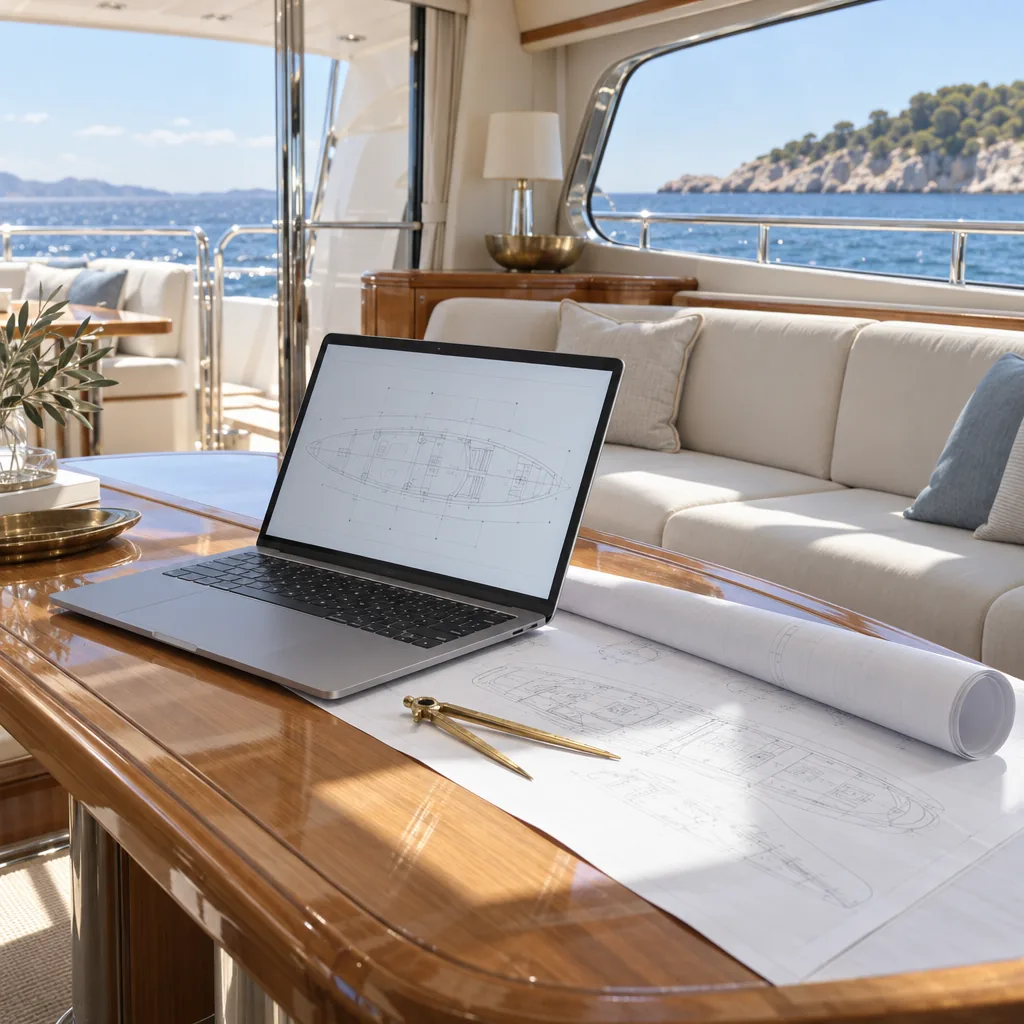
We fit modern automation into yachts built when none of it existed — lighting, climate, AI cameras, screens in every space, pumps, valves and safety monitoring. Without a new boat, and without a refit that costs more than she is worth.

Photographs first, not a sales visit. You get a price range and our suggestions before anybody asks you for anything.
Bilge dry · 14 °C aboard
Shore power on · all secure
“Not every yacht owner is a billionaire”

The boats we work on are fifteen to twenty-five years old, ten to twenty-five metres long, and owned by people who paid for them out of their own pocket. They deserve the same technology as a new ninety-metre — and they can have it, for a fraction of what everybody assumes.

Built on open, proven technology
  • KNX
  • Zigbee
  • Matter
  • Thread
  • Modbus
  • NMEA 2000
  • DALI
  • PoE

We are not a dealer for any of these and we are not endorsed by anyone who owns them. We choose per boat, we tell you what we chose and why, and you own what we fit.

Two ways aboard

It comes down to one question: can we run new cable?

Everything else follows from that. Both answers give you the same boat to live with — what they change is how much of her has to come apart to get there.

In refit

She is opened up

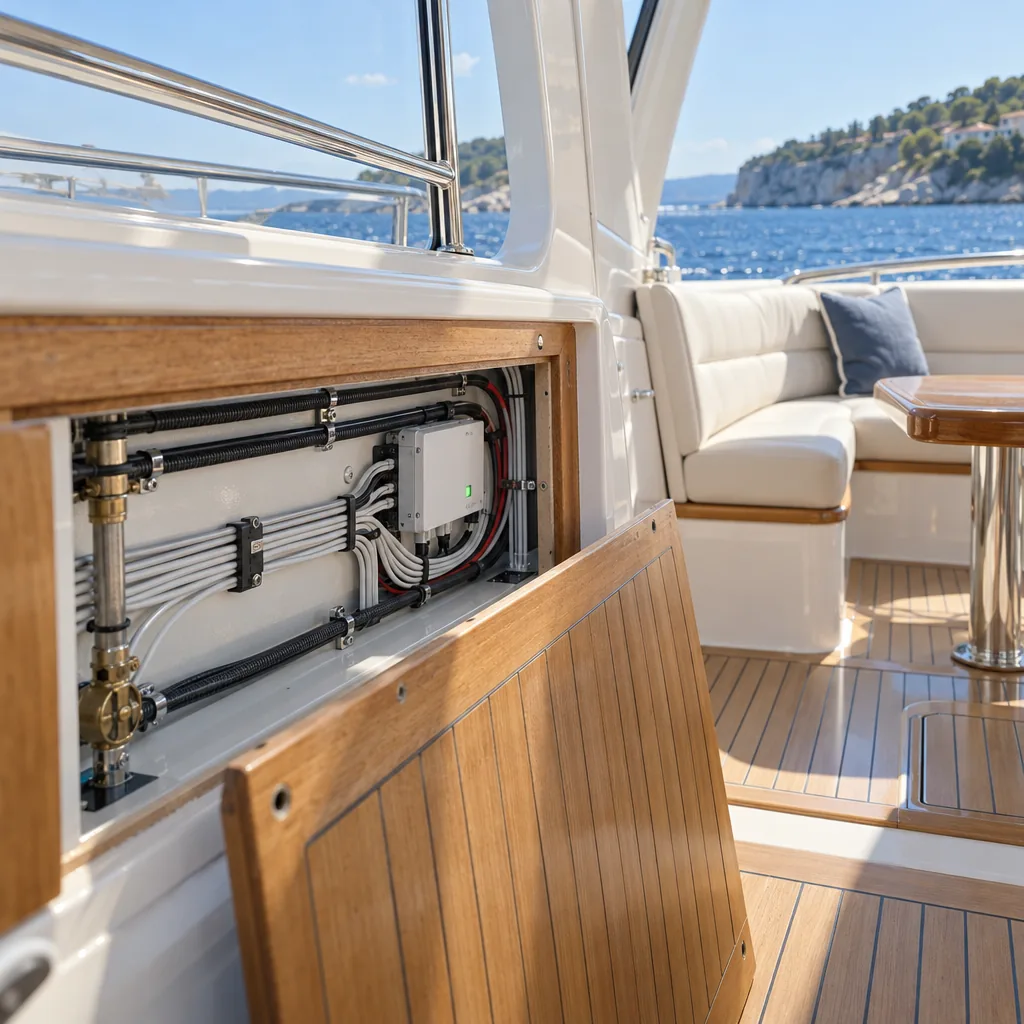
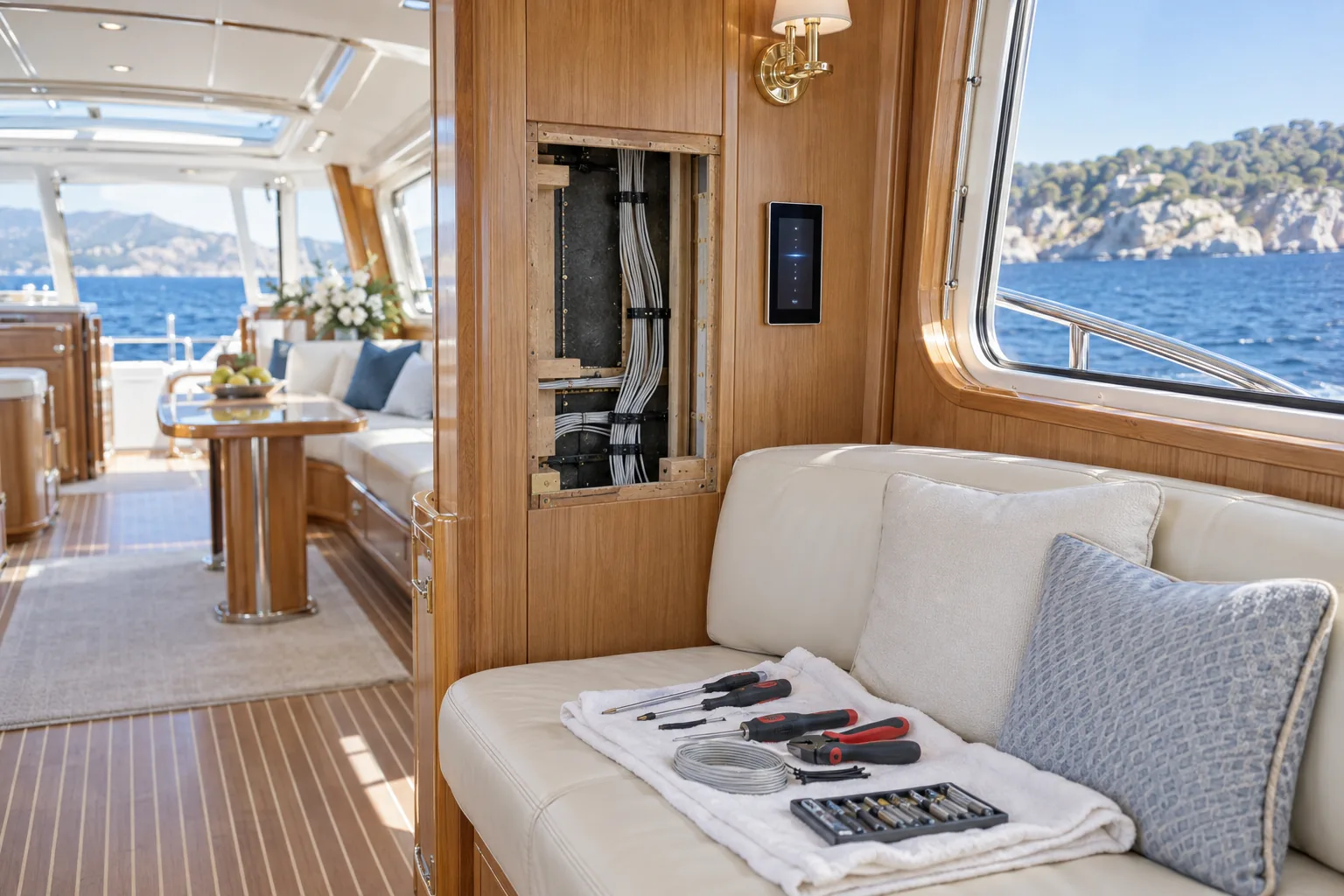
The best case. Panels are off, headlining is down, and we can put in a proper wired backbone while the yard has her anyway.

  • A wired backbone — nothing to lose signal, no batteries to change
  • Screens set flush into the existing joinery, not screwed onto it
  • Cameras and sensors cabled to exactly where they belong
  • Coordinated with the yard, so we are never the reason she is late
How a refit works
In commission

She stays in the water

She is lived on, chartered or simply in use, and nothing may be disturbed. We work wireless, and we work around you.

  • No joinery removed, no headlining dropped, nothing drilled through a bulkhead
  • Devices chosen for salt, damp and vibration — not for a flat
  • Fitted in days rather than months, alongside in her own berth
  • Start with one system and add the rest a season at a time
  • She never leaves her berth
See what it controls

Most boats are somewhere in between: a few runs are possible, the rest is not. That is the commonest design we do, and the one we are best at.

Why bother with an older boat

The hull is not what dates a yacht. The technology is.

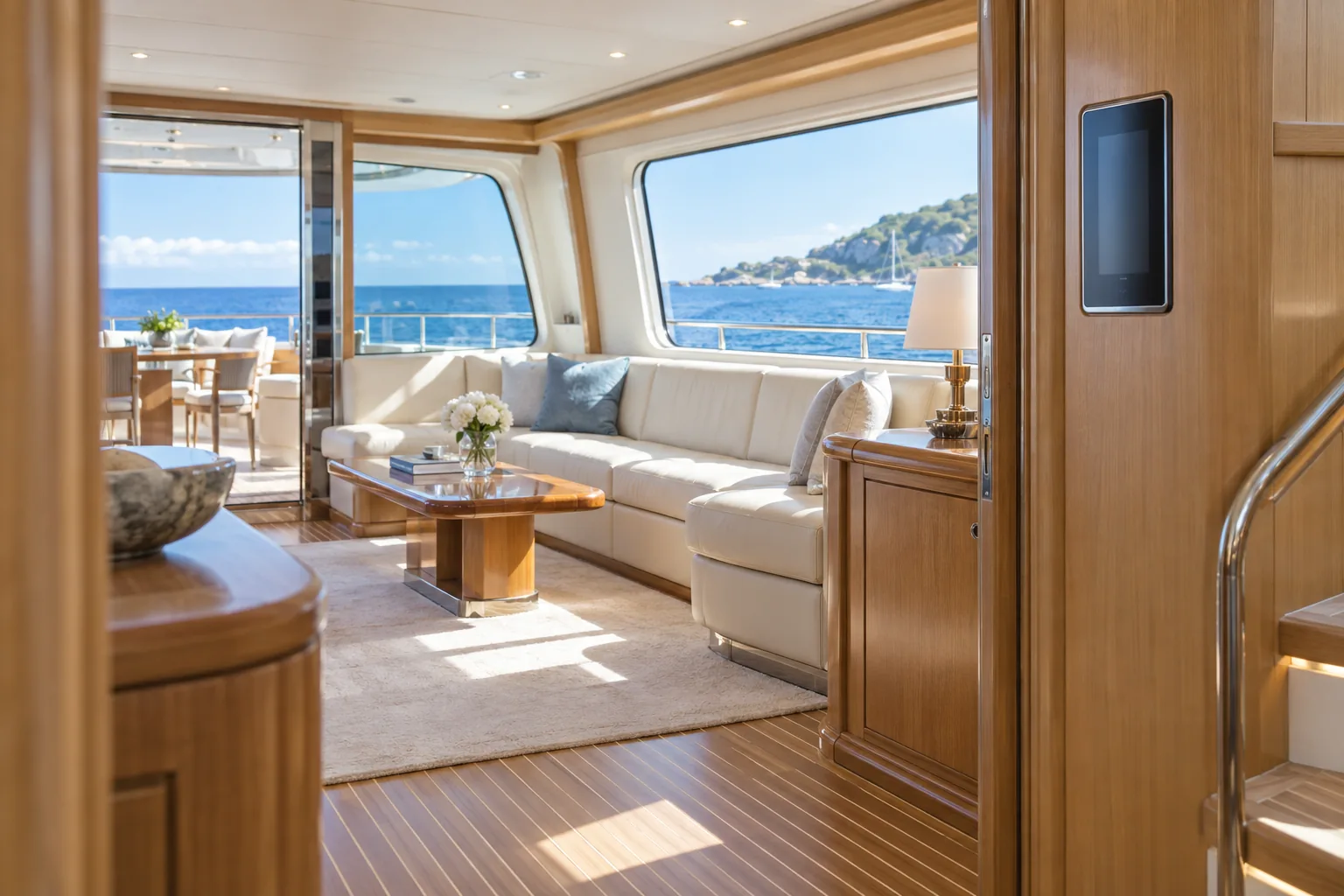
A well-built 2005 motor yacht is still a well-built motor yacht. The hull is sound, the engines have years in them, and her joinery was made by people who are mostly retired now. Put her alongside a new boat of the same size and the difference is not the sea-keeping. It is that the new one has glass in every bulkhead and answers a telephone, and yours has a panel of toggle switches with the labels worn off.

That difference is worth a great deal of money at a broker's — and almost none of it is structural. It is screens, sensors, a controller, and somebody who knows how to make the three talk to each other on a boat rather than in a house.

We are in the business of closing a twenty-year gap for the price of a tender.

Which is also why we only take on boats that are worth it. If the survey finds her wiring at the end of its life, or her systems past saving, we will say so and decline the work. Selling a control system to sit on top of a problem helps nobody, least of all us.

Her, as she is today
  • Twenty-two toggle switches, four of them still labelled
  • Nobody knows whether the bilge pump ran last week
  • The heating is on or off, and somebody must be aboard to choose
  • The only camera is the one at the marina gate
  • Finding out whether she is all right means driving down
  • A broker calls her “a well-kept boat of her age”
Her, after a season with us
  • One screen in the saloon, and the same one on your phone
  • Bilge, batteries, shore power and temperature, logged and watched
  • Heating on from the motorway; warm when you step aboard
  • Cameras that tell a person from a gull, on deck and below
  • You already know she is all right
  • A broker calls her “recently upgraded”
0
The typical age, in years, of the boats we work on
0
The upper end of the size range we specialise in
0
Separate systems we can bring under one control
0
Holes cut through a bulkhead on a boat in commission
What she can do

Everything you touch aboard, under one system

Lighting, climate, security and entertainment — and the machinery nobody thinks about until the day it fails.

Lighting
Circuits, dimming, scenes, night mode
Climate
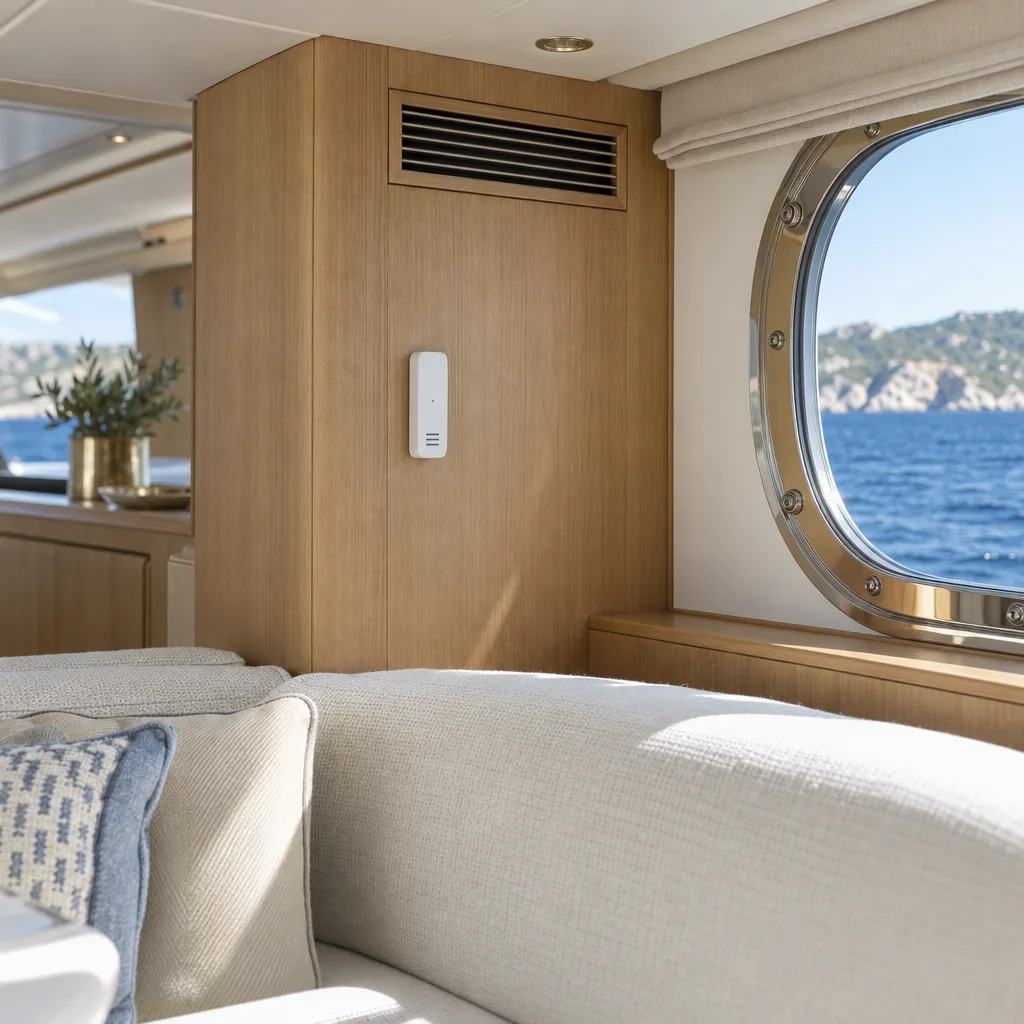
Air conditioning, heating and humidity, per cabin
Security
AI cameras, on deck and below, day and night
Entertainment
Audio, television, projector and screen

And the rest of her — which is usually what earns the system its keep:

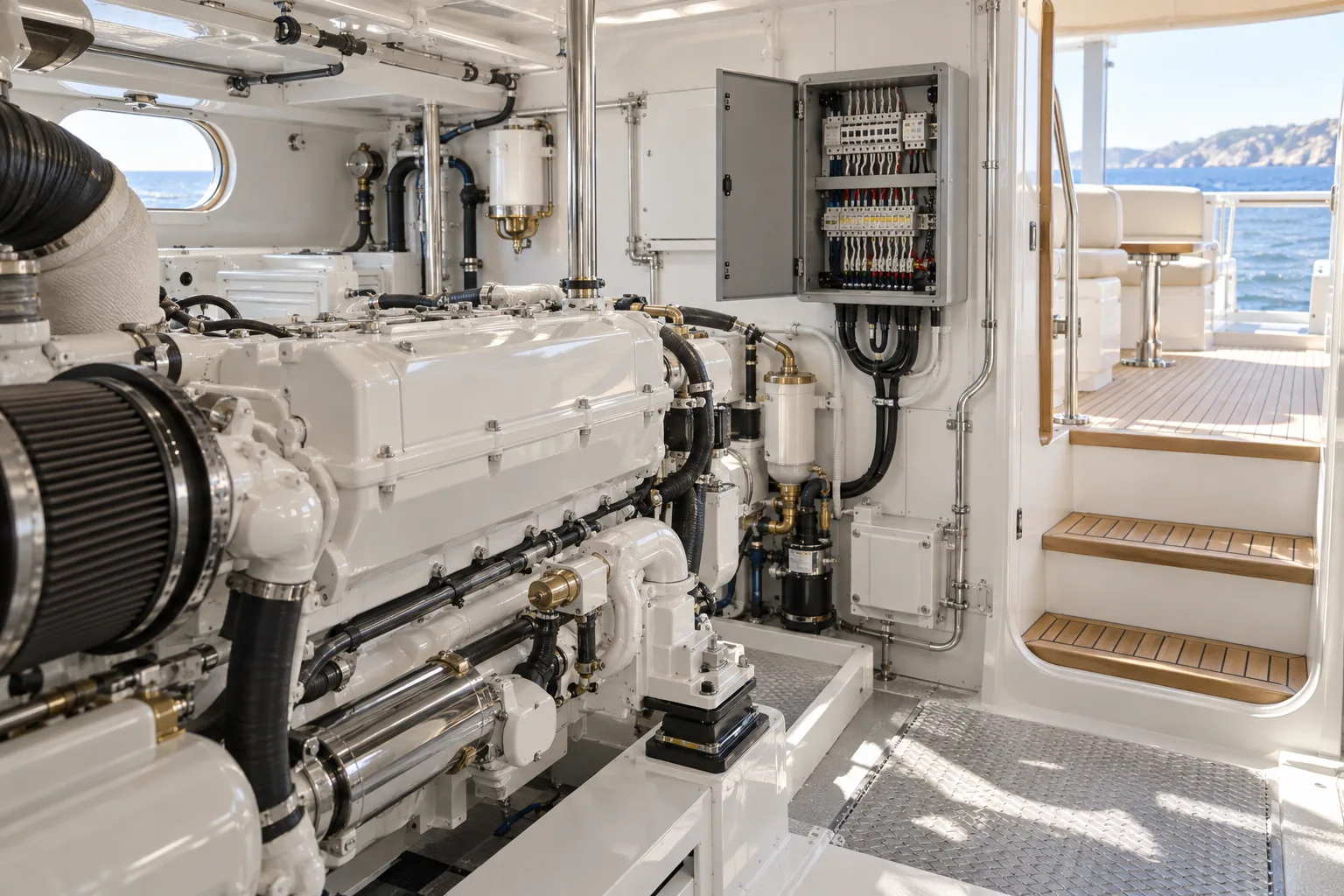
Fresh water pumpsGrey and black tanksSeacocks and valvesBilge pumpsWater leak detectionFire and smokeEngine room temperatureBattery stateShore powerGeneratorFridges and freezersPasserelle and davitAwnings and blindsHatchesUnderwater lightsAnchor watchWi-Fi and 4G aboardDoor station and intercom
Security

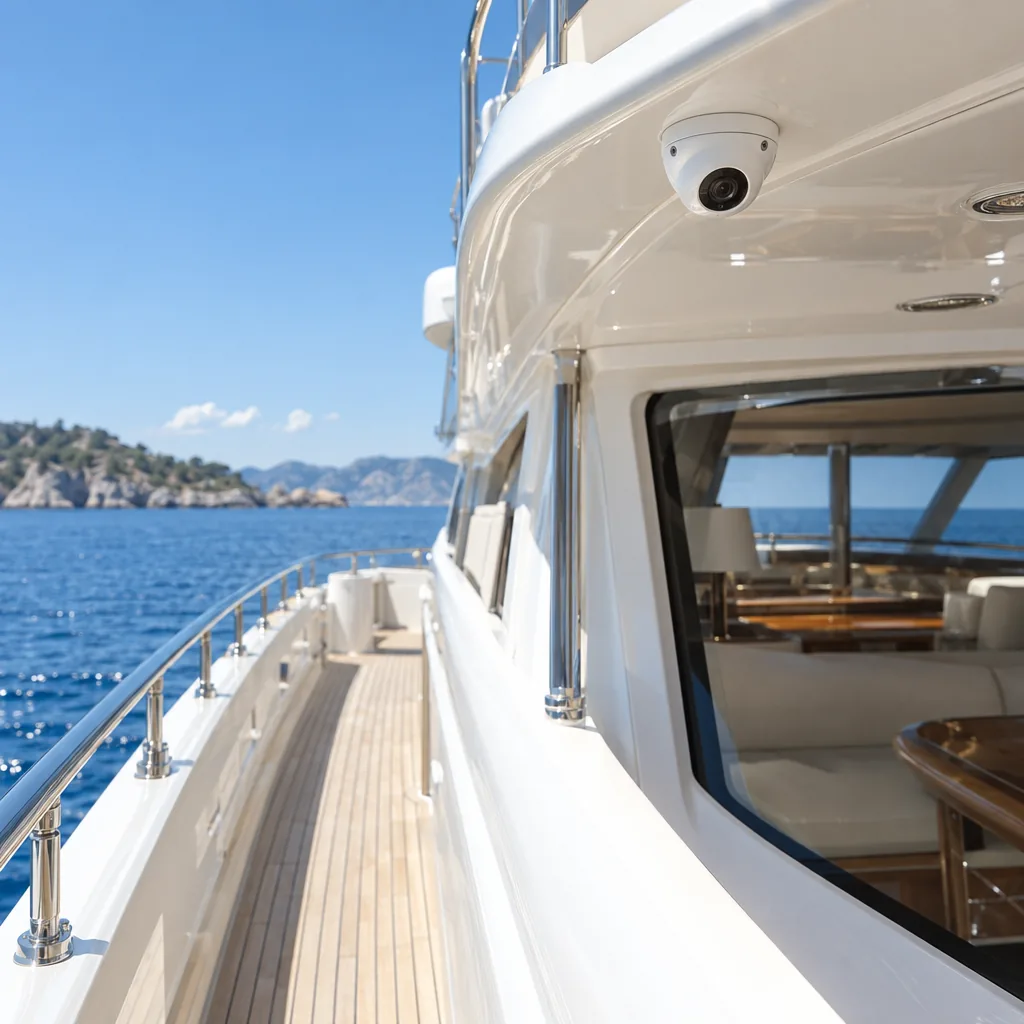
Cameras that know the difference between a person and a gull

An alarm that fires every time a wake rolls through the marina is an alarm you mute in week two. Ours run their detection aboard and tell you only when something is genuinely worth knowing.

  • Cameras in every space you want covered, and all the way round the deck
  • Detection runs on the boat: a person on the passerelle raises an alarm, a gull on the pulpit does not
  • Somebody steps aboard at three in the morning — your phone knows before they reach the saloon door
  • Recording kept aboard on your own storage, not on somebody's subscription
  • Deck lighting, interior lighting and the horn can answer an intrusion by themselves

We install the equipment; you operate it. This is not a monitored security service and nothing here reaches a control room — see clause 17.4 of the Terms. If a camera can see the pontoon or a neighbouring boat, §8 of the Privacy Policy explains what that makes you responsible for.

Screens

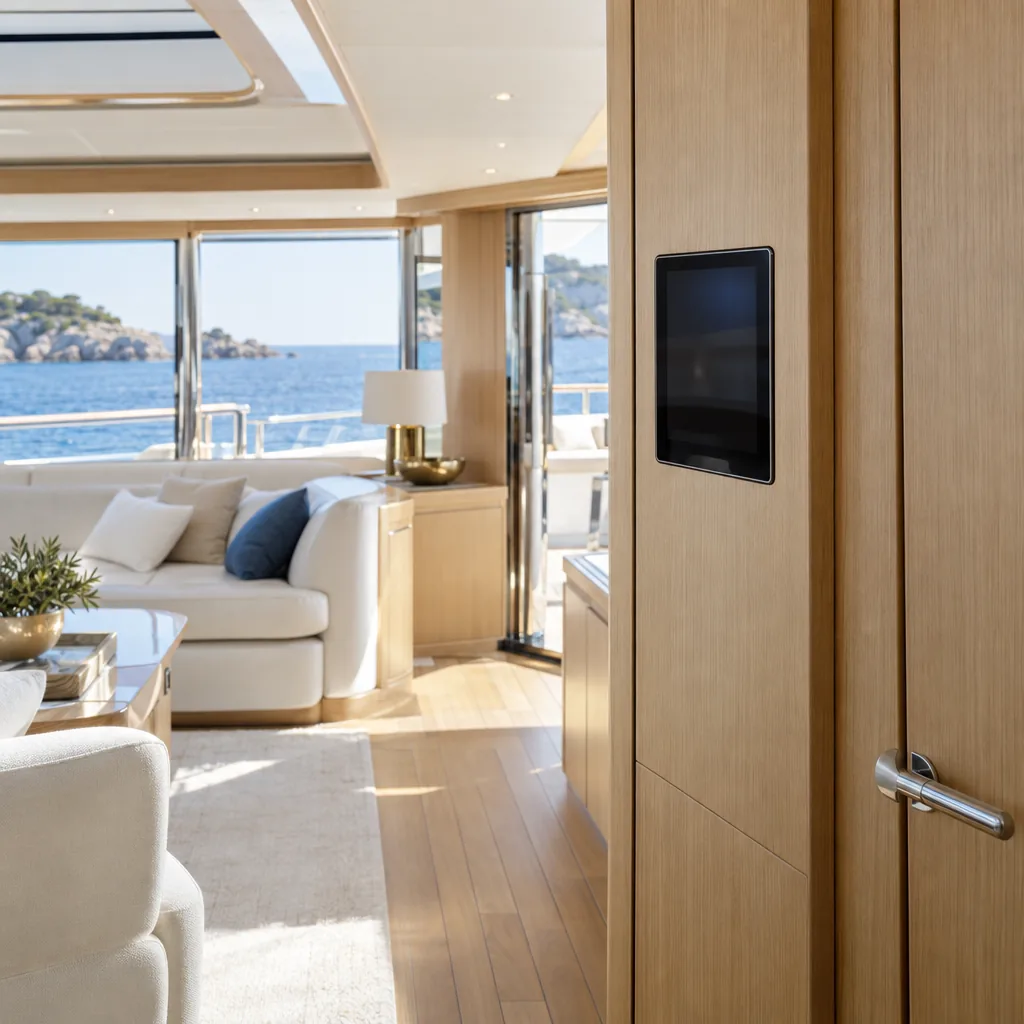
The switch panel becomes a piece of glass

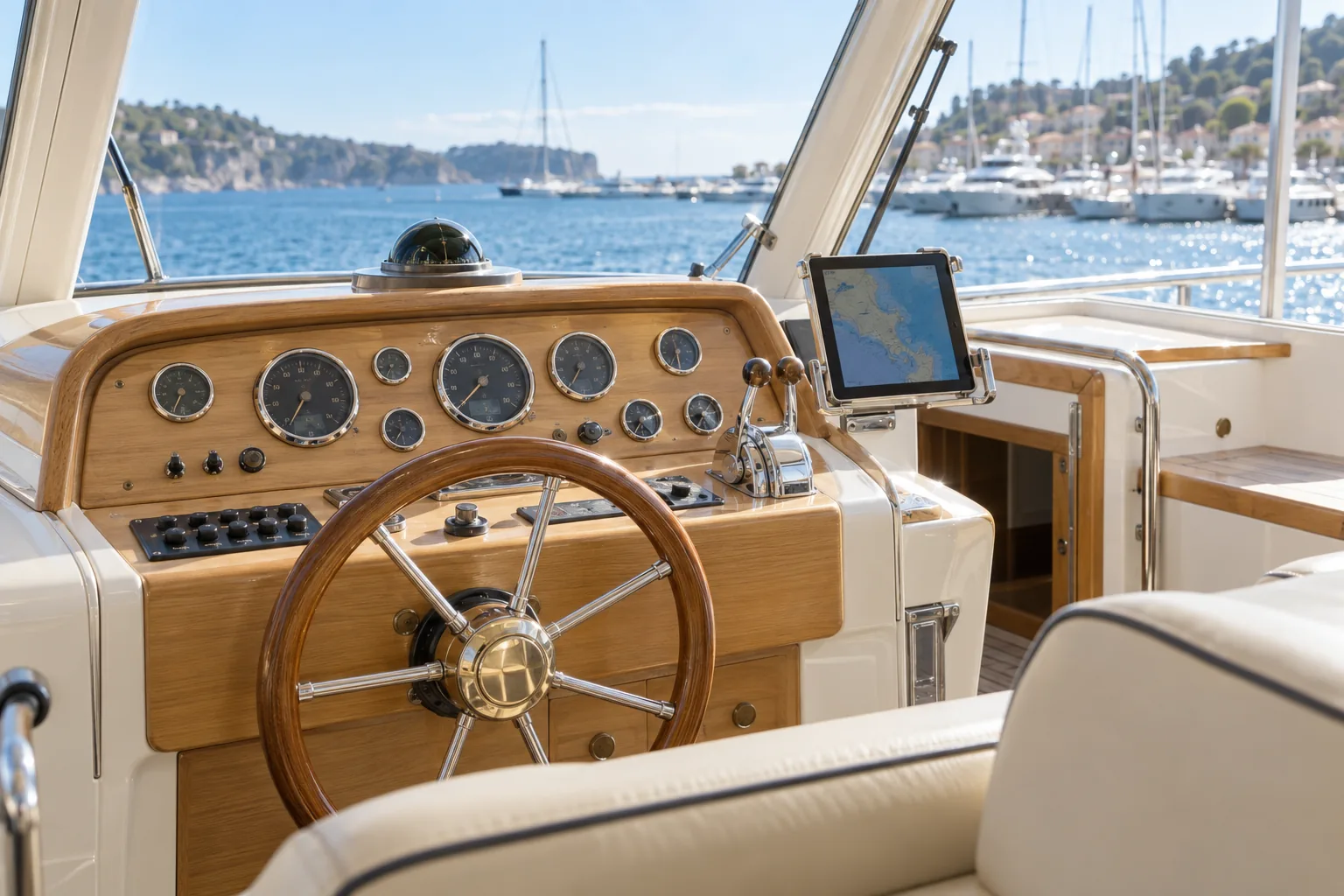
On a boat of this age the most dated thing aboard is the row of toggle switches by the helm. The second is having to walk to the engine room to find out what is running.

  • A flush wall panel in the saloon, the cabins, the galley — wherever you want one
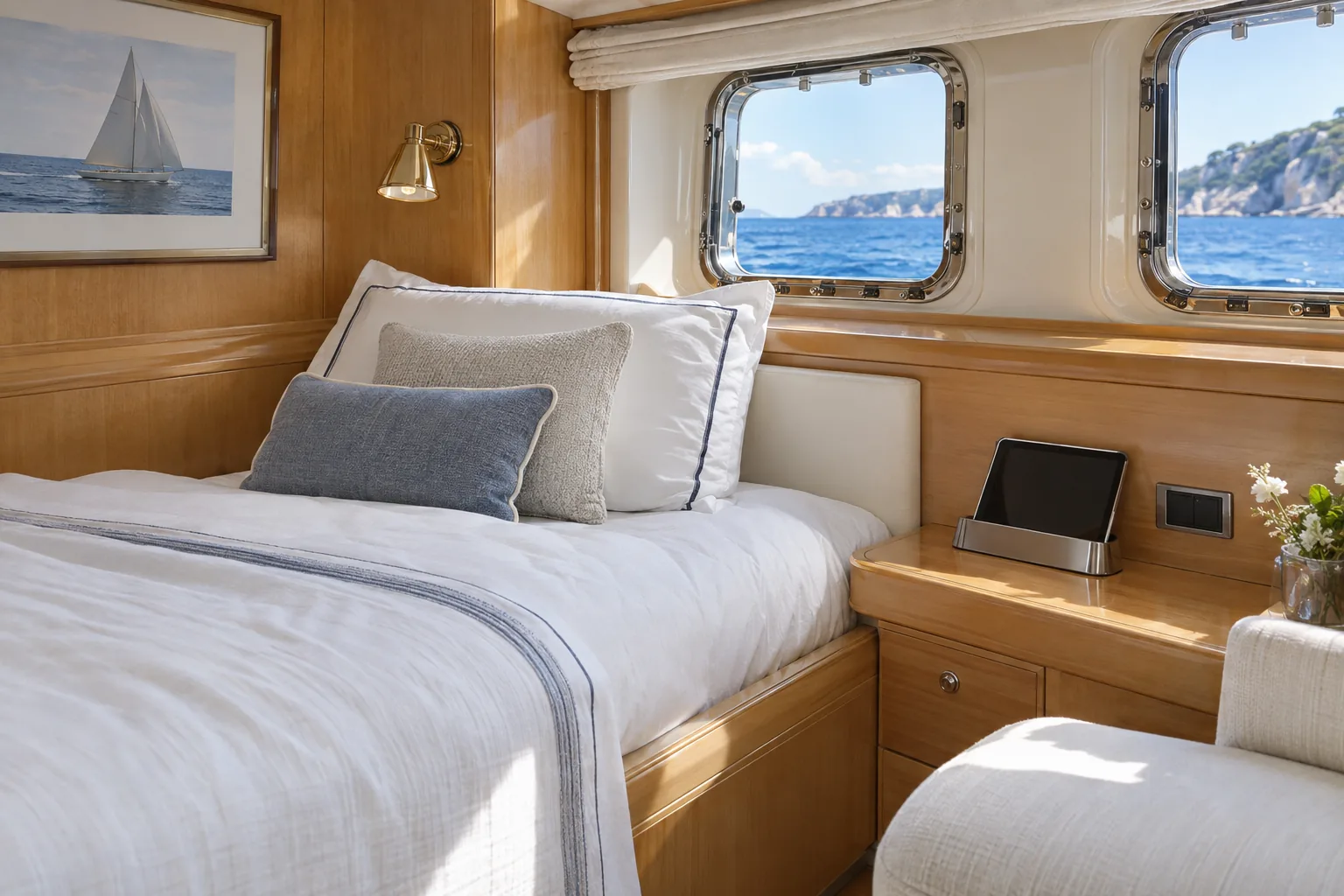
  • A tablet that lifts out of its cradle and goes up to the flybridge with you
  • A screen at the helm showing the whole boat, not only the plotter
  • Fitted into the existing joinery, and into existing apertures wherever one exists

The original switches stay and keep working, unless you ask us to remove them. On a boat that is usually the right answer: one that obeys only a screen is one you cannot use when the screen is flat.

From anywhere

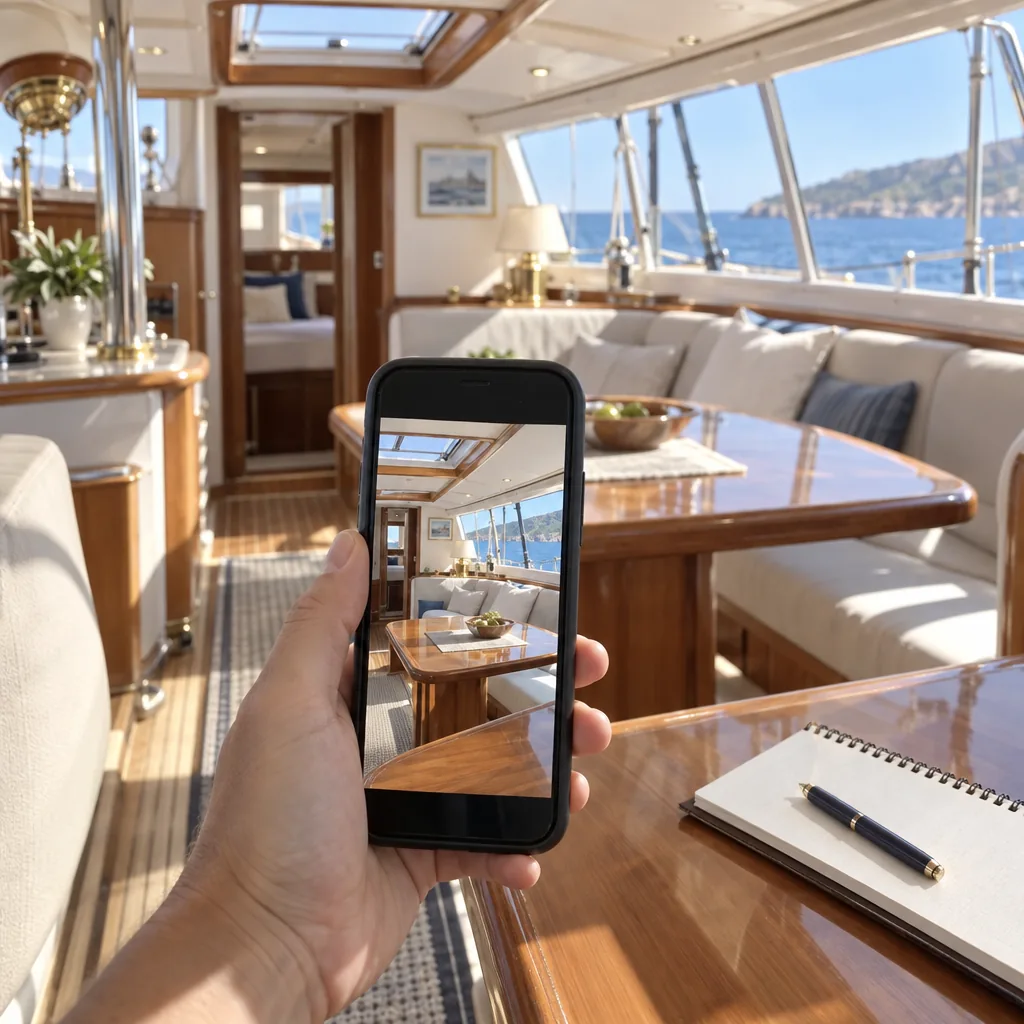
She answers the phone, in the marina or from home

Aboard, it saves you walking the length of the boat. From four hundred miles away in February, it is the reason you sleep.

  • The same application aboard and from the other side of the continent
  • Heating, air conditioning and hot water on, hours before you arrive
  • A notification the moment shore power trips or a bilge pump runs twice
  • Give the yard, the cleaner or a guest access for a week, then take it back

Remote access needs a connection aboard. If she has none we fit one — 4G, marina Wi-Fi, or both, with each falling back to the other. Everything aboard keeps working without it; the connection is only what lets you see her from far away.

Safety

The part that pays for the whole system, once

A boat spends most of her life alone. Nearly everything expensive that happens to her happens while nobody is aboard — and nearly all of it announces itself hours before it becomes serious.

  • Water leak detection in the bilges, under the galley and at every seacock
  • Bilge pump run counting — a pump that ran four times last night is a message
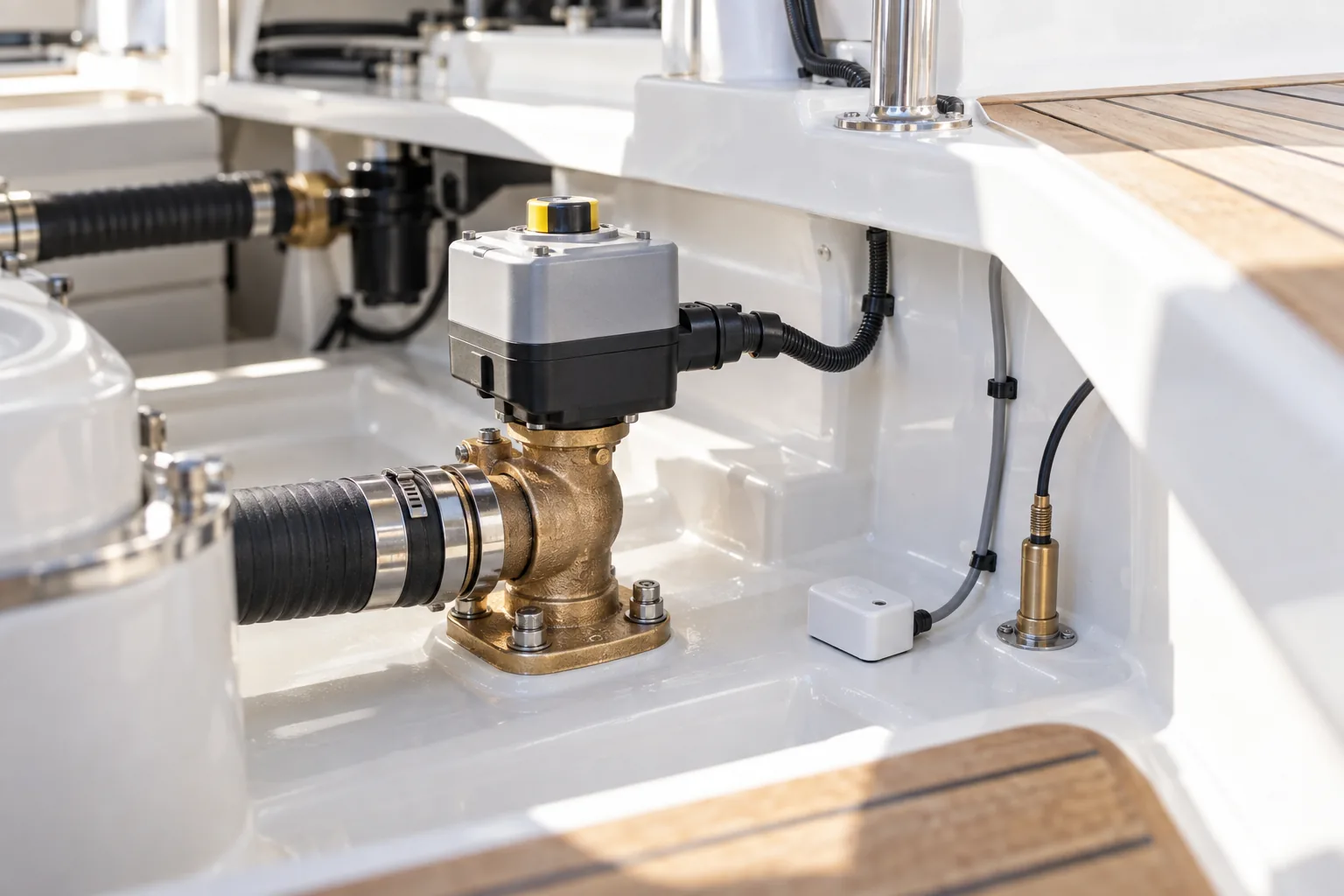
  • Motorised seacocks and valves: close them from the pontoon, or from home
  • Fire and smoke detection in the engine room, the galley and the cabins
  • Temperature aboard — below freezing in February, thirty-five degrees in August
  • Battery state, charger and shore power, watched continuously

None of this replaces the equipment she is required to carry, and none of it relieves her master of anything. It is an extra pair of eyes, not a watchkeeper.

Written for your boat

An installer fits the functions a manufacturer thought of. We write yours.

This is the difference between a set of connected devices and a system. Every one of these is a sentence somebody said to us about their own boat, turned into something she now does by herself.

You are two hours away

The heating comes on, the water heater starts, the fridge drops to temperature, and the cabin lights come up to a low warm setting as you step aboard.

The last person leaves

Lights off, audio off, the circuits that do not matter drop out, the alarm arms, and the seacocks you nominated close behind you.

A bilge pump runs twice in an hour

Your phone tells you, with the water level and the run count, long before the third time becomes a problem.

Somebody steps aboard at night

Deck lighting comes up, the cameras record, and you get a still of the passerelle — while a gull landing on the pulpit is ignored.

Shore power fails

She tells you, sheds the loads that do not matter, protects the batteries, and starts the generator if you allowed her to.

You say “goodnight”

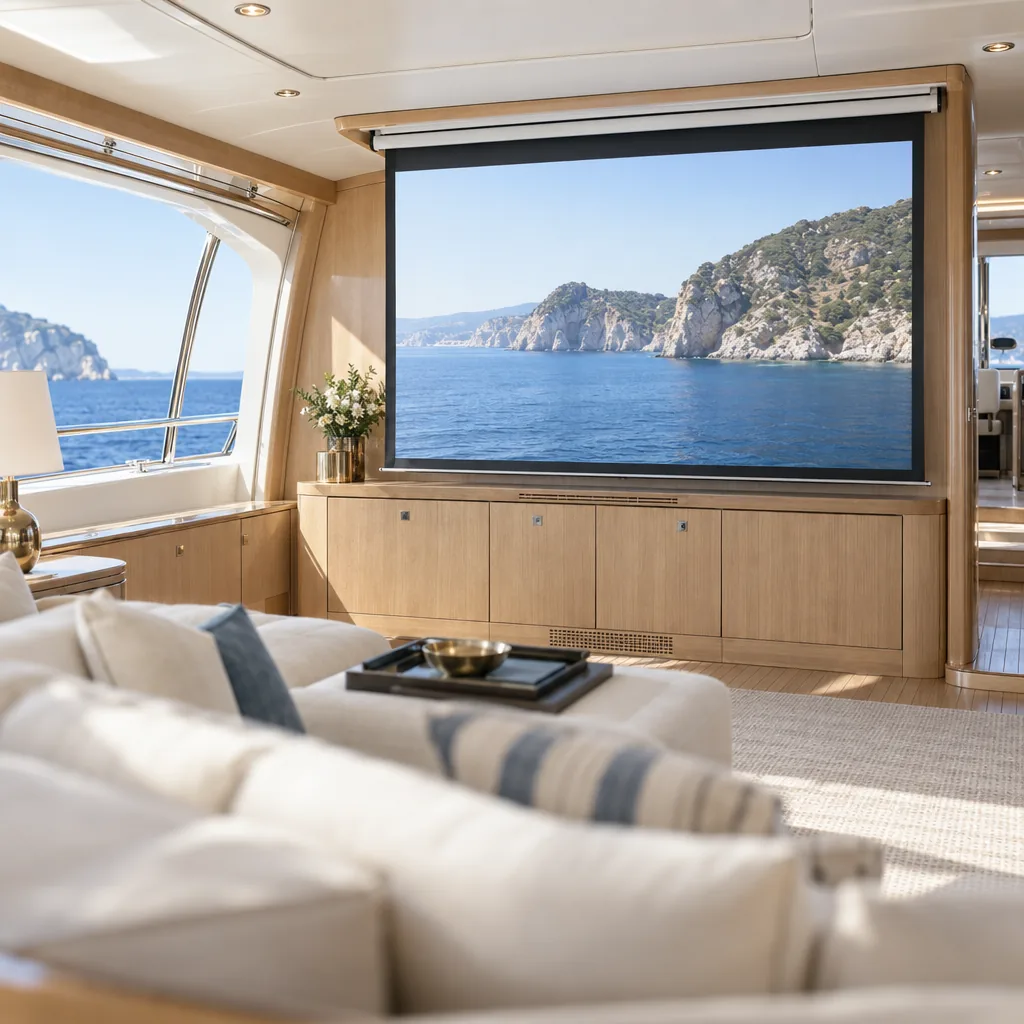
The saloon dims, the television and projector go off, the screen rolls up, the cabin lights follow you aft — and every bilge and smoke alarm stays wide awake.

Not one of these came out of a manufacturer's menu of scenes. They are written for your boat, and rewritten whenever you change your mind — which everybody does, in the first month.

How it goes

Five steps, and the first two are free

Nobody travels anywhere until you have seen a price range and decided you like it.

01

You tell us about her

The spaces aboard, what is in them, and what you would like her to do. Ten minutes in the quote form, then reply to our email with photographs. No visit, no cost.

02

We study her and price a range

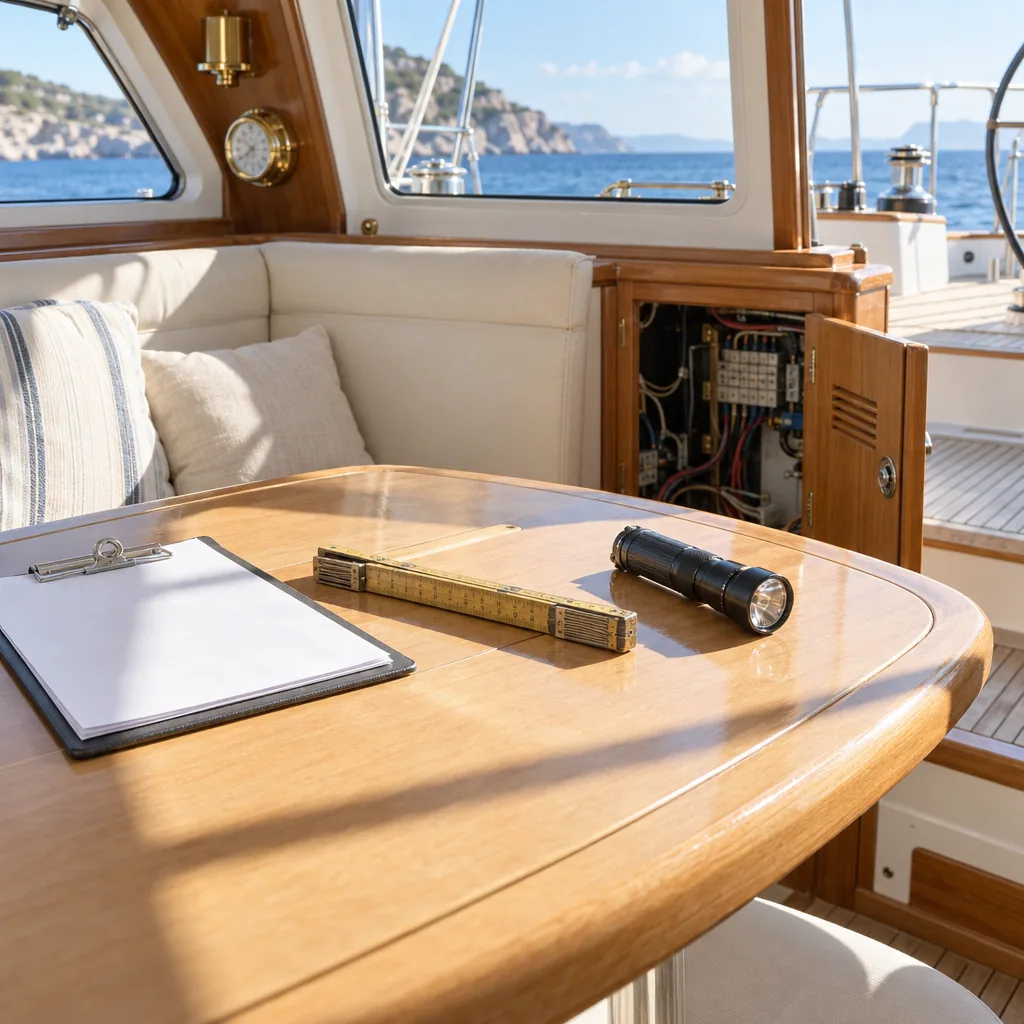
An engineer goes through it properly and comes back with an approach, a price range, and usually two or three things you had not thought of. Still free, and it commits you to nothing.

03

We come aboard, and fix the price

If the range suits you, a survey fee books the visit — and comes off the price in full if you go ahead. Two hours aboard, you present, and a definitive written quotation that does not move afterwards.

04

We fit it

In her berth or in the yard, in hours agreed with you, cleaning up at the end of every day. On a boat in commission you carry on using her throughout.

05

We hand her over

Working, documented and yours: accounts, credentials and drawings. Then an hour aboard with whoever is actually going to use it.

The first two steps cost you nothing. The survey fee comes off the price in full if you go ahead, and comes back to you if our definitive quotation lands above the range we gave you. It is not refunded if you simply change your mind, or if she turns out to be materially different from what you described.

Tell us about her

Ten minutes in the quote wizard tells us enough to put a real number on it. No technology questions — just the boat, and what you would like her to do.

The first two steps cost you nothing. No sales visit, no newsletter.