The boats nobody else wants to modernise
New superyachts arrive with all of this built in. Nobody builds it for a fifteen-year-old forty-footer — which is why it is the only thing we do.
Why almost nobody does this work
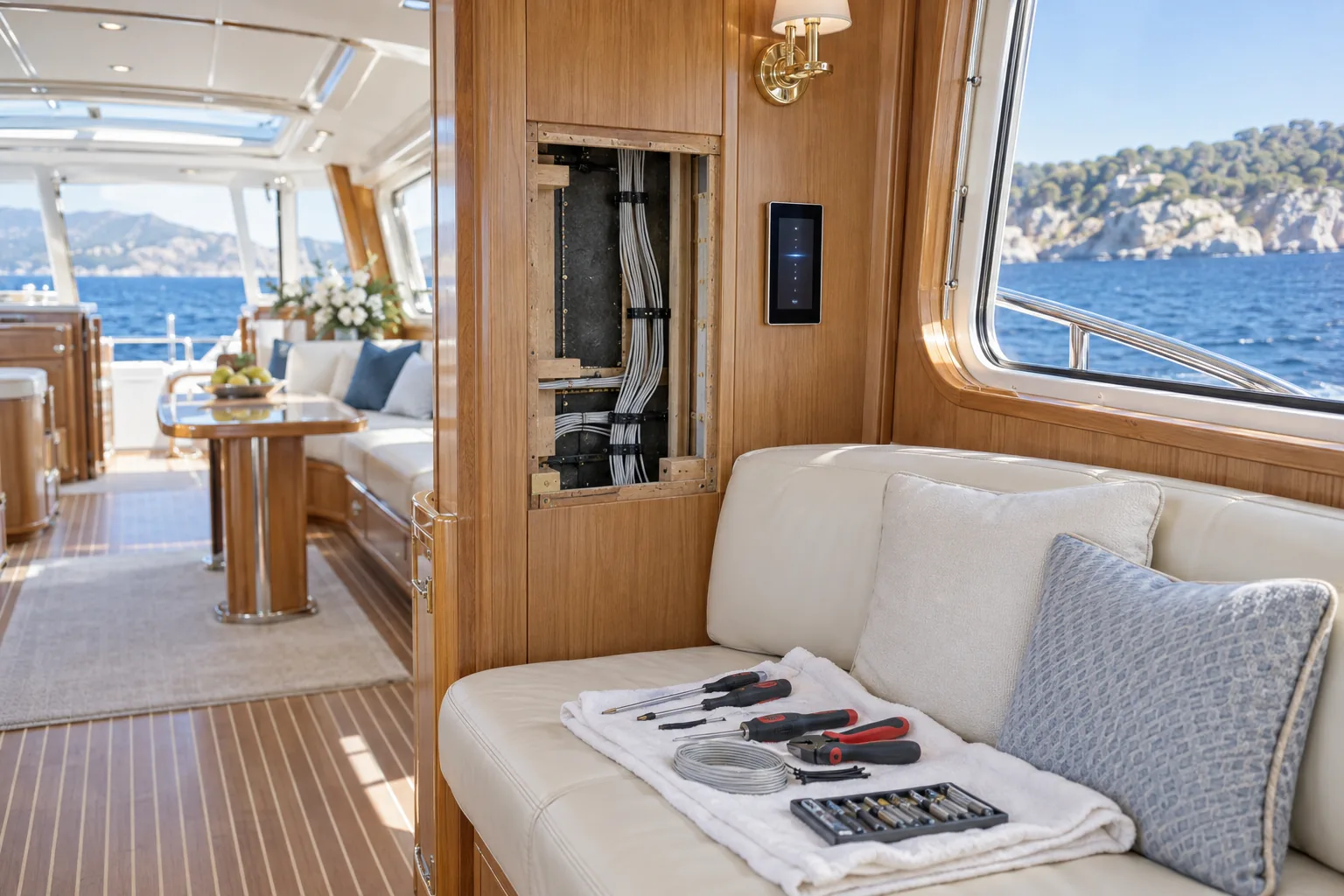
Domestic integrators know automation but not boats. They specify equipment that dies in a salt atmosphere, they assume mains power and a stable earth, and they have never met a hull that flexes.
Marine electricians know boats but sell what their distributor stocks, which on a vessel of this age usually means a proprietary system that was discontinued in 2011 and cannot be extended. We are the third thing: building-automation engineers who work only on boats, and only on boats old enough that nobody planned for any of this.
An older yacht is not a harder problem. It is a different one — and it has been nobody's job.
Nothing about her was designed for this
No conduit runs where you need one, the headlining is bonded, and the one cable tray is already full. Every boat of this age is a one-off, and every one is surveyed as one.
Her power is not a house's power
Twelve or twenty-four volts, an inverter, a generator, shore power that comes and goes, and an earthing arrangement that has to be respected. Anything we fit has to behave when all of that changes at once.
The environment eats equipment
Salt, damp, vibration, and forty degrees in a closed boat in August. We fit marine or industrial-rated devices where it matters — and say plainly when a cheaper domestic part is perfectly good enough.
The joinery is irreplaceable
Nobody is making that teak veneer any more. Apertures get reused, panels come off in one piece and go back on, and anything we cannot do invisibly we do not do at all.
No, we are not going to pull your boat apart
There are two ways to build this, and we will tell you plainly which one your boat should have — including the times when the answer is the cheaper one.
With new cable
When she is in a yard, or a run can be made through existing conduit, headlining or a cable tray, we put in a wired backbone. It is better engineering, and it is what we would do to our own boat.
- Nothing to lose signal, and no batteries to change
- Power over Ethernet for cameras and panels — one cable each
- Twenty years of service life, because that is what cable does
Without touching her
When nothing may be disturbed, the whole system goes in wireless: mains and battery devices, a marine-grade mesh, and controllers in lockers that already exist. Days rather than months, and reversible.
- No joinery removed and nothing drilled through a bulkhead
- Devices rated for damp, salt and vibration, not for a living room
- Every part of it comes out again without leaving a trace
Most boats get both: cable where a run already exists, wireless everywhere else. Which is which is our decision to make — the only thing we need from you is an honest answer about what may be opened up.
It has to look as though it was always there
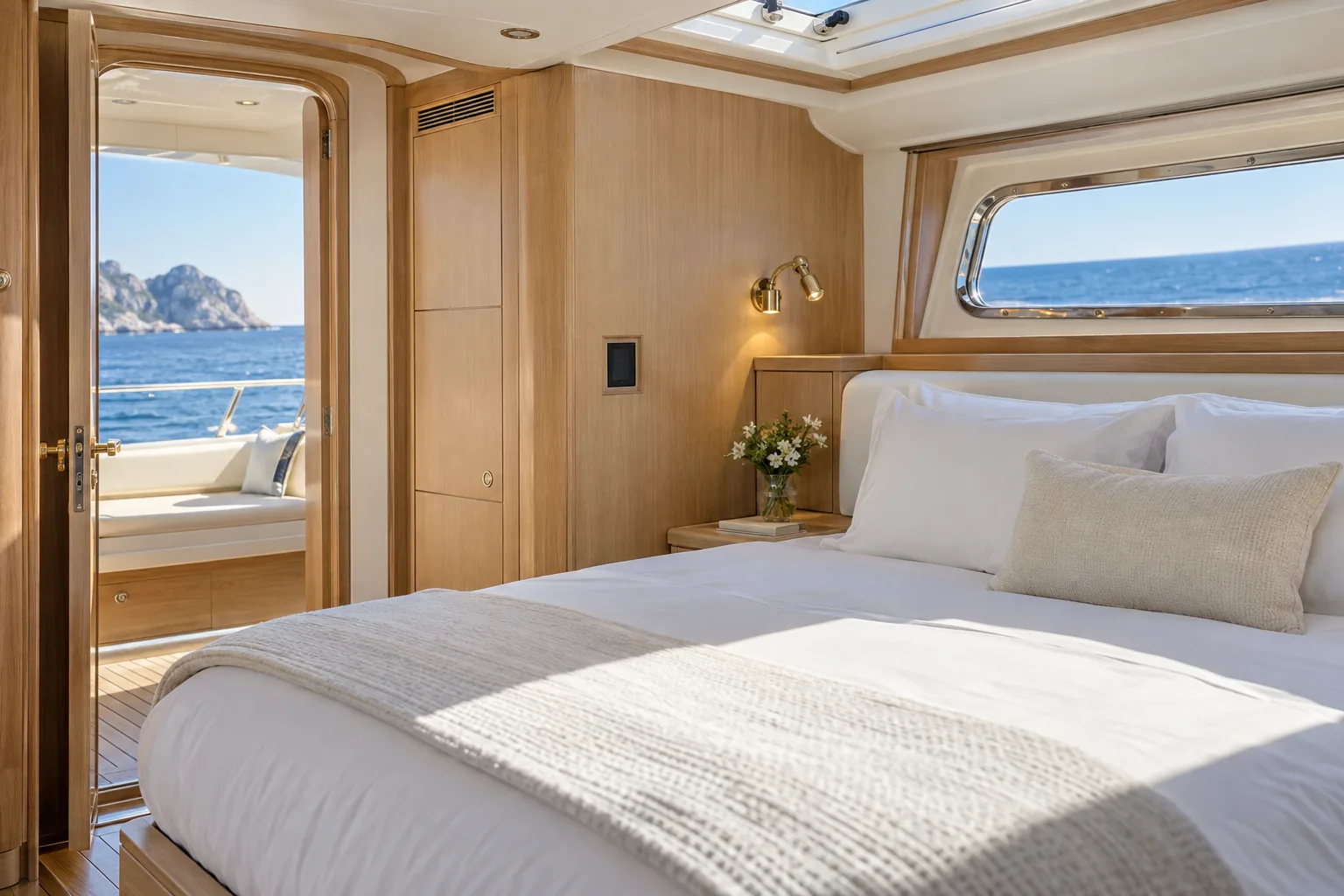
The fastest way to devalue a well-kept older boat is to screw modern plastic to her bulkheads. Everything we fit is chosen and set to disappear into her.
- Panels flush into existing apertures wherever one exists
- Bezels and surrounds matched to her joinery, not to a catalogue
- Cable hidden in existing runs, cleated and labelled the way a yard would
- Every original switch left working, unless you ask us to remove it
Five steps, and the first two are free
Nobody travels anywhere until you have seen a price range and decided you like it.
You tell us about her
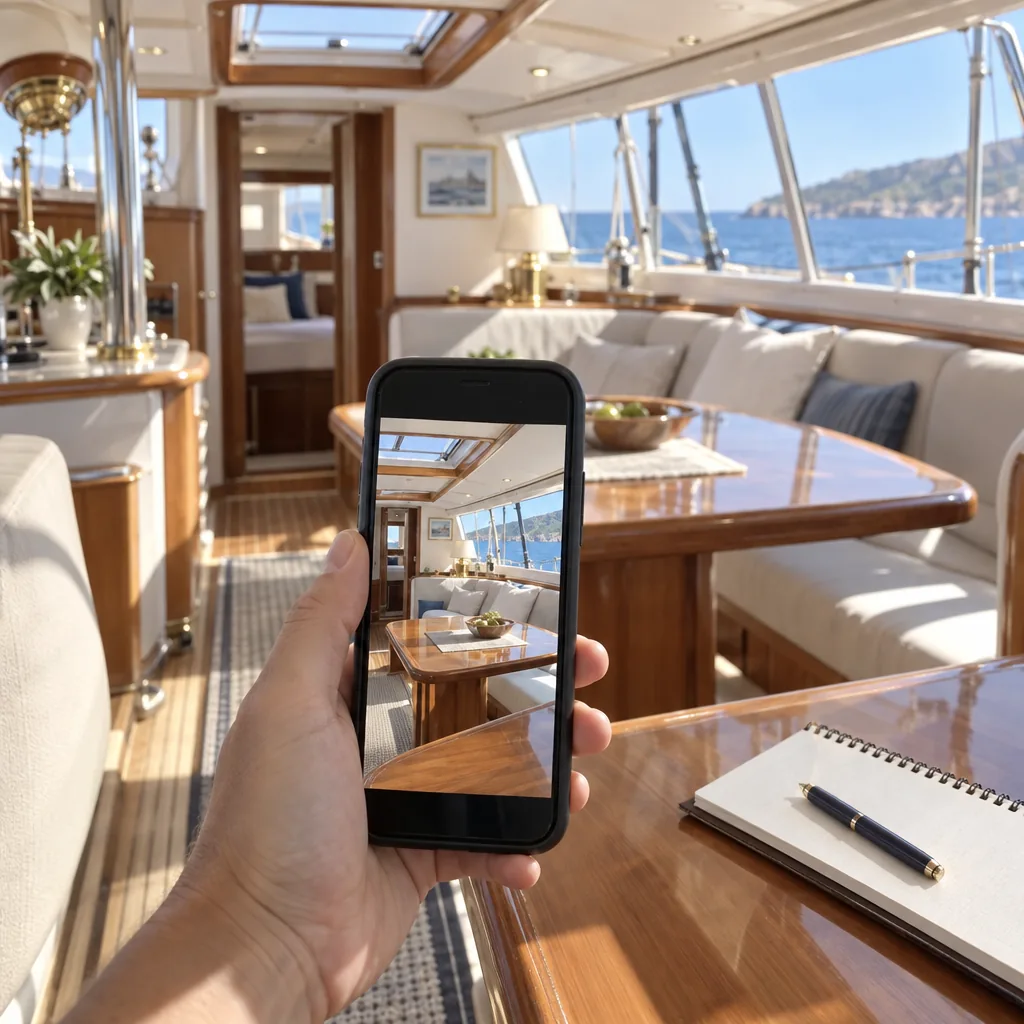
The spaces aboard, what is in them, and what you would like her to do. Ten minutes in the quote form, then reply to our email with photographs. No visit, no cost.
We study her and price a range
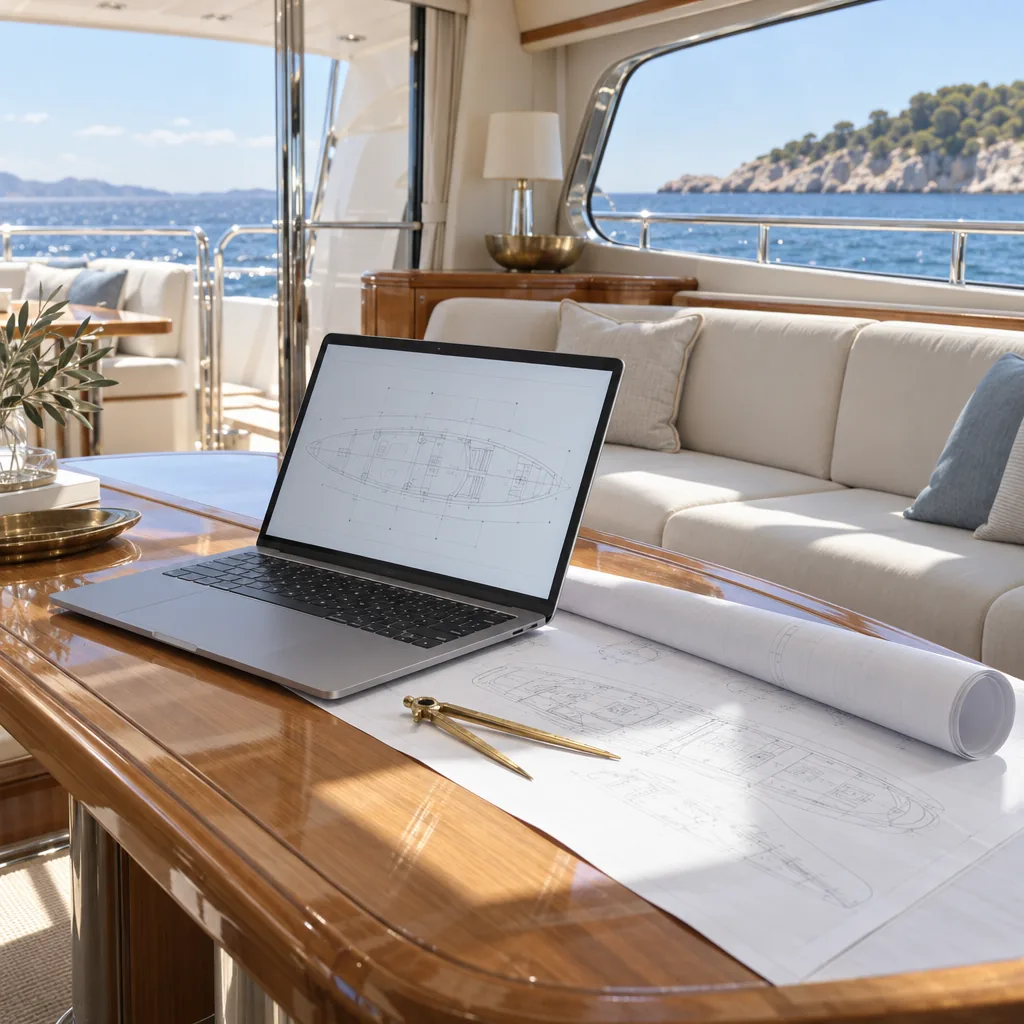
An engineer goes through it properly and comes back with an approach, a price range, and usually two or three things you had not thought of. Still free, and it commits you to nothing.
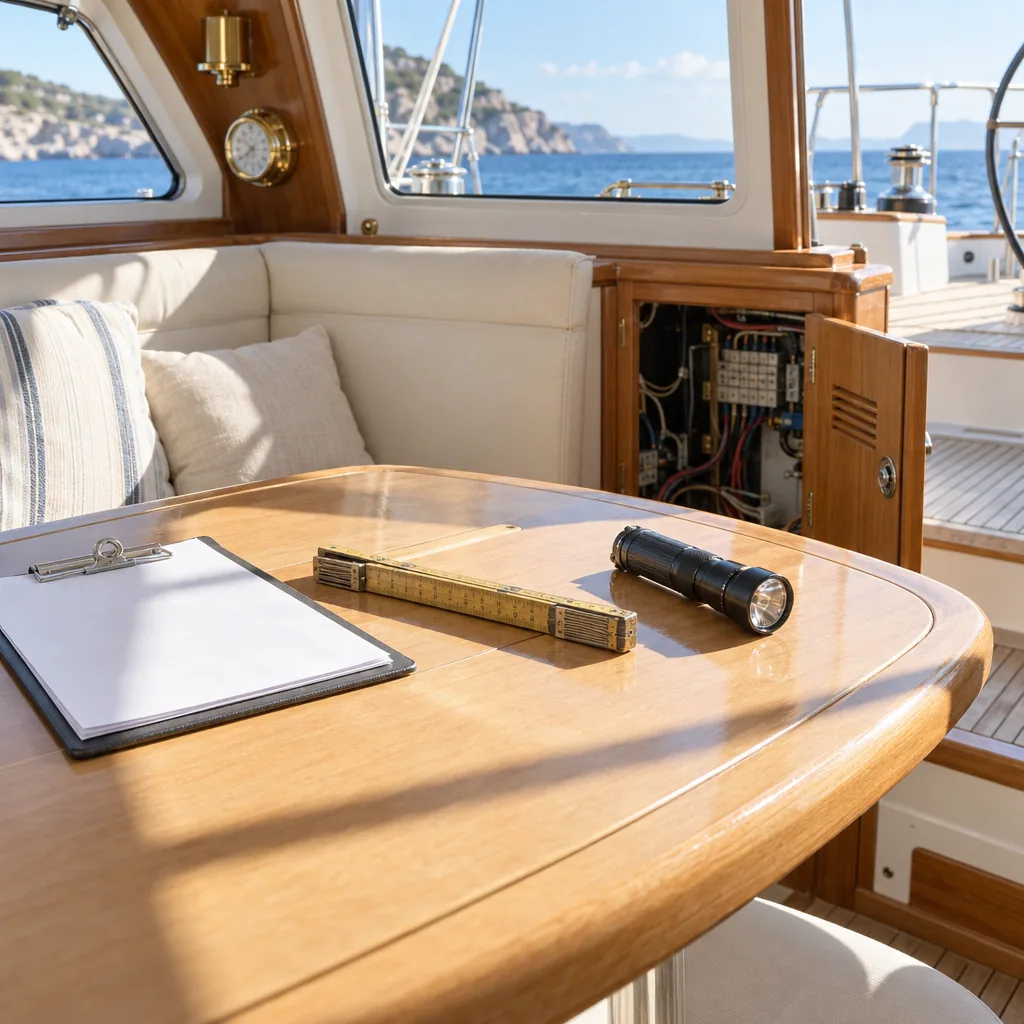
We come aboard, and fix the price
If the range suits you, a survey fee books the visit — and comes off the price in full if you go ahead. Two hours aboard, you present, and a definitive written quotation that does not move afterwards.
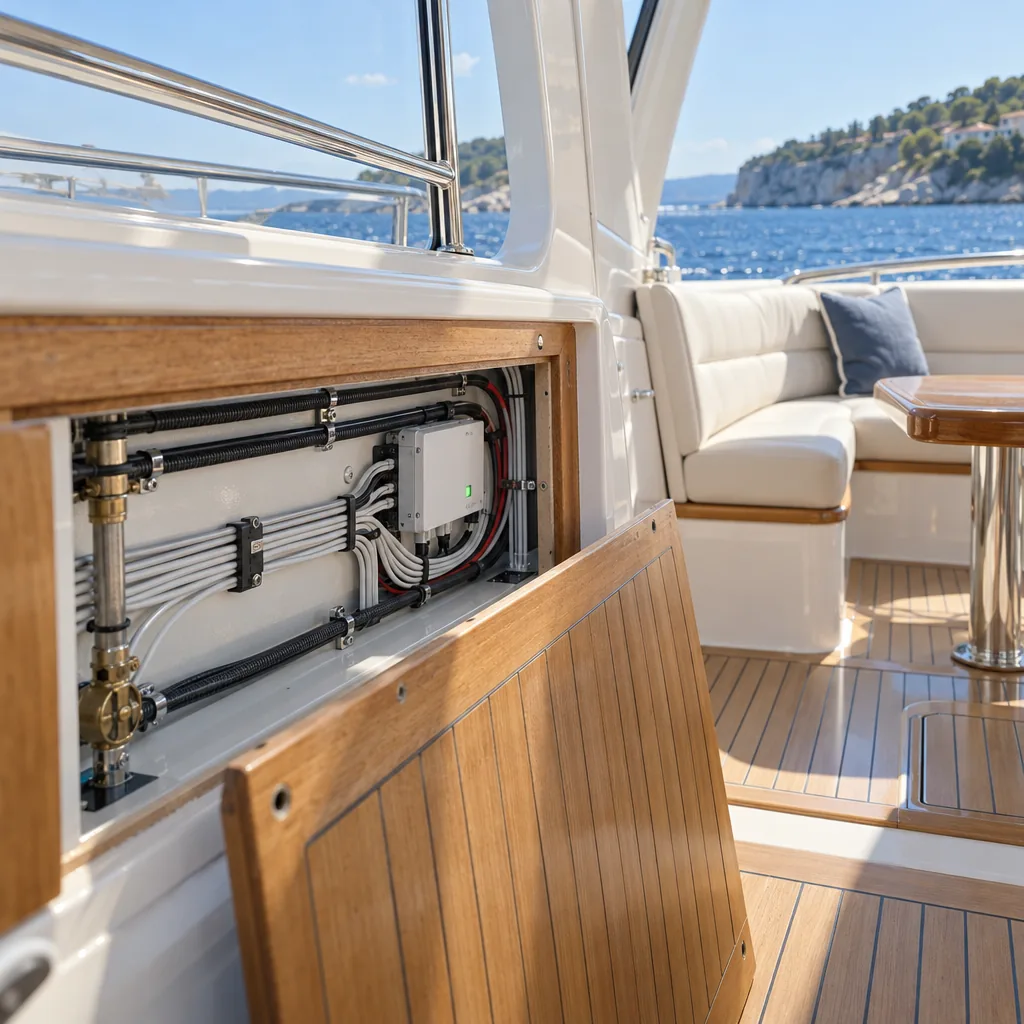
We fit it
In her berth or in the yard, in hours agreed with you, cleaning up at the end of every day. On a boat in commission you carry on using her throughout.
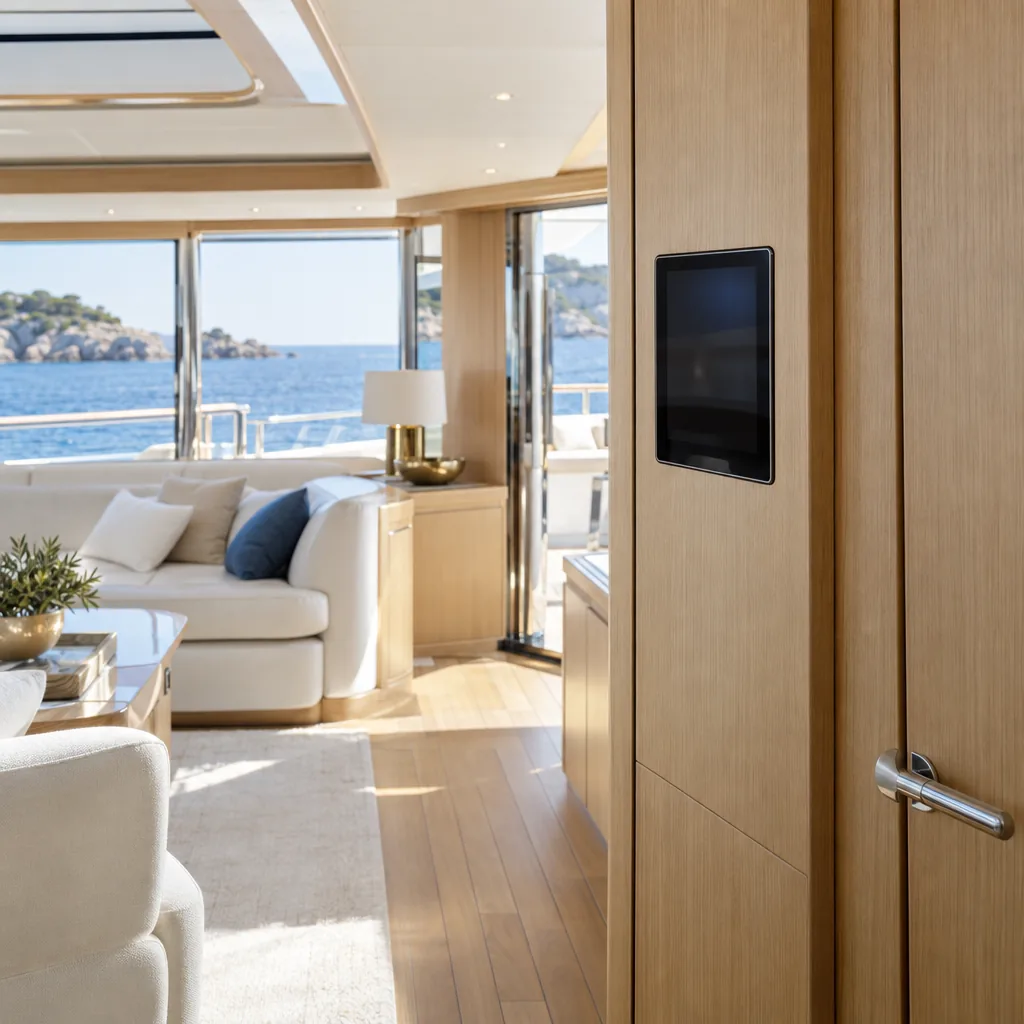
We hand her over
Working, documented and yours: accounts, credentials and drawings. Then an hour aboard with whoever is actually going to use it.
The first two steps cost you nothing. The survey fee comes off the price in full if you go ahead, and comes back to you if our definitive quotation lands above the range we gave you. It is not refunded if you simply change your mind, or if she turns out to be materially different from what you described.
The seven questions everybody asks first
Is this going to damage my boat?
No. On a vessel in commission nothing is cut, nothing is drilled through a bulkhead and no joinery is removed — the whole installation is reversible and leaves no trace. Where cable does go in, it follows a route that already exists, and the survey establishes exactly what that is before any work is agreed.
What does it cost?
A single system on a ten-metre boat — the lighting, or the heating, or the cameras — starts in the low thousands. A whole twenty-metre motor yacht with screens in every space, deck cameras, climate, pumps, tanks and safety monitoring is a serious project and is priced as one. Send photographs and a description and a considered price range comes back for nothing; the fixed price follows the visit aboard.
My boat is from 2004. Is she too old?
That is exactly the age we work on. Below about 1990 it depends far more on how she has been kept and rewired than on the year she was built — send us the details and we will tell you honestly, including when the answer is no.
Can I start small?
Yes, and most people do. One system this season, another the next, on a controller sized from the start for all of it. Nothing gets thrown away when you add to it.
What happens when the internet goes down?
Everything aboard carries on working. The system runs on a small server installed aboard, on the boat's own Wi-Fi network — so the lights, the heating, the pumps and the alarms work at sea, with no internet at all. A connection only carries what you see from a distance: when she is within reach, in a harbour, the same app answers from anywhere.
Do I need to be there while you work?
For the survey, ideally yes: you know things about her that no drawing does. For the installation, no — we work with the yard or the marina and keep you posted, with photographs.
Do you travel?
Yes, regularly — and that is exactly why the first two steps happen at a distance. We read your photographs and price a range before anybody gets on an aeroplane. The survey fee is banded by where she lies and you are told it before you commit to anything, and for a boat a long way off we will usually say whether it is worth our coming at all before you have spent a thing.
Tell us about her
Ten minutes in the quote wizard tells us enough to put a real number on it. No technology questions — just the boat, and what you would like her to do.
The first two steps cost you nothing. No sales visit, no newsletter.